Meet Lapras
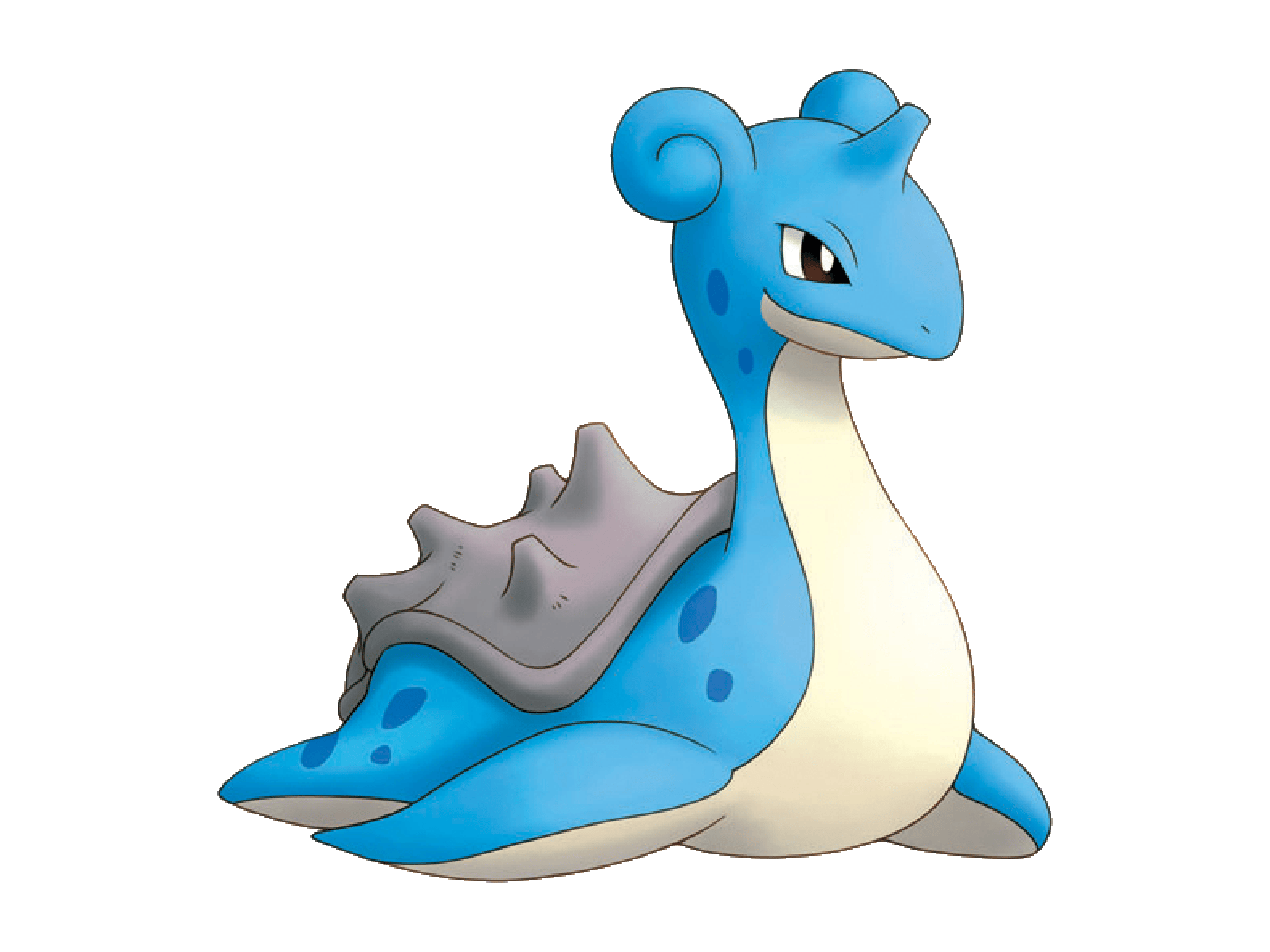
Few Pokémon capture the blend of elegance and strength quite like Lapras, the gentle giant of the seas. Introduced in the very first generation of games, this Water/Ice-type has remained a fan favorite for decades, thanks to its serene demeanor, striking design, and recurring presence across both the mainline titles and the anime. Lapras resembles a plesiosaur crossed with a modern ferry, its smooth blue body topped by a distinctive gray shell studded with small bumps along its back. A long, graceful neck curves up to a rounded head, and its dark eyes carry a calm, almost knowing expression. Flippers replace legs, built for gliding through open water rather than walking on land. In the games, Lapras is prized for its balanced stats, especially its high HP and solid Special Defense, making it a durable special wall and a reliable teammate in casual and competitive play alike. It learns powerful Ice- and Water-type moves such as Ice Beam and Surf, along with support options like Sing and Perish Song. Players first encounter it as a gift in Silph Co. during Red and Blue, and later find it surfacing in calm ocean routes, often serving as a living ferry across the water. In the anime, Lapras plays a memorable role in Ash's journey. He raises one from an egg and rides it across the Orange Islands, forging a bond that highlights the species' loyal and nurturing nature. Later episodes feature wild Lapras pods, reinforcing its image as a protector of the sea and a symbol of friendship between humans and Pokémon.Abilities and Battle Strengths
Lapras is a Water/Ice-type Pokémon with a remarkably balanced stat spread, making it a flexible team member that can fill offensive, defensive, or support roles depending on how you build it.
Abilities
- Water Absorb (standard): Restores 25% of maximum HP when hit by a Water-type move. This gives Lapras a full immunity to Water attacks and a reliable source of recovery, especially against bulky Water-types that rely on Scald or Surf.
- Shell Armor (standard): Prevents critical hits. This is the safer choice on defensive sets, since it removes the randomness that can otherwise break through Lapras's solid bulk.
- Hydration (standard): Cures status conditions while rain is active. This shines on rain teams, where Lapras can shake off burns, paralysis, or poison each turn.
- Ice Body (hidden): Recovers 1/16 of maximum HP each turn during hail or snow. Useful on hail-oriented teams but far more situational than Water Absorb.
Strengths
- Excellent all-around stats: 130 HP, 85 Attack, 85 Special Attack, 80 Defense, 95 Special Defense. Lapras can take hits and hit back from either side.
- Massive movepool covering Water, Ice, Electric, Psychic, Normal, and support options like Thunderbolt, Psychic, Body Slam, Sing, and Heal Bell.
- Water/Ice typing gives it strong neutral coverage against many common threats and lets it threaten Dragon, Flying, Ground, and Grass-types.
- Reliable recovery through Water Absorb, Rest, or Leftovers makes it hard to wear down.
- Freeze-Dry is a standout option, hitting Water-types super effectively and bypassing the usual resistance.
Weaknesses
- Four weaknesses: Electric, Grass, Fighting, and Rock. Electric and Fighting attacks are common and often fast, which can force Lapras out.
- Base 60 Speed is slow, so it usually moves last and struggles to revenge-kill faster threats.
- Only two resistances (Water and Ice), and its Ice typing cancels the Fire resistance Water normally provides.
- Ice typing invites Rock and Fighting coverage, and Lapras lacks the raw power to break through dedicated walls without setup.
- Vulnerable to passive damage from Stealth Rock, Toxic, and burn if running offensive sets.
Tips for Trainers
- Run Water Absorb on most sets; the immunity and healing are usually worth more than blocking critical hits.
- Invest in HP and Special Defense for a bulky tank, or HP and Special Attack for a mixed attacker.
- Pair Lapras with a teammate that handles Electric and Fighting-types, such as a Ground-type like Hippowdon or a Ghost-type like Gengar.
- Use Freeze-Dry to punish opposing Water-types that would otherwise wall it.
- Consider Assault Vest to patch up its Special Defense and turn it into a reliable special wall.
- On rain teams, Hydration plus Rest creates a self-sustaining wall that cannot be statused.
- Lead with it cautiously: Lapras makes a better mid-game pivot once you have scouted the opponent's faster threats.


Evolution and Where to Find It
Lapras does not evolve, and it never has. It is a standalone single-stage Pokémon with no pre-evolution and no evolution, so there is no evolution line to trace. Since its debut in Generation I, Game Freak has kept Lapras as a final-form Pokémon available only by catching or receiving it directly.
Because it can't be evolved from anything, obtaining Lapras always means finding it in the wild, receiving it as a gift, or trading for it. How that works varies by game:
- Generation I (Red, Blue, Yellow) and FireRed/LeafGreen: A person on the second floor of Silph Co. hands you a Lapras as a gift. In Yellow, it appears in the same spot. This is the only reliable way to get one in these titles.
- Gold, Silver, Crystal and HeartGold/SoulSilver: Lapras appears in the wild on Fridays in the basement of Union Cave, where a single one spawns each week.
- Ruby, Sapphire, Emerald: Not available in the wild; it must be traded in from another game.
- Diamond, Pearl, Platinum: Found in the wild in Victory Road, though it is rare.
- Black, White, Black 2, White 2: Not obtainable without trading from another generation.
- X and Y: Lapras is given to you as a gift on Route 12, and it can also be found while surfing in some areas.
- Sun, Moon, Ultra Sun, Ultra Moon: It appears in the wild at Poni Wilds and can be encountered through the Island Scan feature.
- Sword and Shield: Lapras shows up in the Wild Area, particularly around lakes in the DLC areas, and in Max Raid Battles.
- Scarlet and Violet: It can be caught in the wild in the Terarium after the Indigo Disk DLC, and through Tera Raid Battles.
The consistent pattern is that Lapras is a gift or a rare wild encounter rather than something you raise from a weaker form. Since it has no evolution, any Lapras you catch is already the finished product.
Fun Trivia
Lapras has been a fan favorite since the very first generation, and a few details about it are easy to overlook even after years of playing.
A Gentle Giant With a Dark Dex Entry
Lapras is widely portrayed as a calm, intelligent Pokémon that ferries people across water, but several of its Pokédex entries take a surprisingly grim turn. Multiple games note that it was hunted almost to extinction because of its docile nature and the value of its shell, which is why it's considered rare in the wild. The contrast between its friendly reputation and this overhunting backstory is one of the darker bits of lore tied to a Gen 1 Pokémon.
The Mystery of Its Shell and Typing
Despite being a Water-type associated with the sea, Lapras is also part Ice-type, making it the only Pokémon in Generation 1 with that combination until later additions. Its design is often described as resembling a plesiosaur, and its hard shell is said to serve as a form of protection rather than a true shell in the biological sense.
A Special Place in the Games
In the original Red and Blue, a single Lapras is given to the player as a gift in Silph Co., making it one of the few guaranteed encounters with the species. This gift Lapras became a staple of many players' teams, and it remains one of the most memorable in-game gifts in the entire series.
Its Signature Move and Competitive Niche
Lapras is closely tied to the move Sing in the anime, but in battle it's best known for Shell Armor and Water Absorb as abilities, plus access to moves like Ice Beam and Thunderbolt. Its balanced stats and wide movepool have kept it relevant in casual play even as its competitive usage has fluctuated across generations.
The Anime Connection
The most famous Lapras in the franchise belongs to Ash, who rides one during the Orange Islands arc. This particular Lapras is later reunited with its pod, and the storyline is often cited as one of the more emotionally resonant moments in the early anime.
You Might Also Like: 14 Things Every Fan Should Know About Leafeon 34
Which Pokemon should we cover next? Tell us your favorite in the comments!